Thursday, December 20, 2012

Irish around the world


     I’m going to talk about the large number of Irish immigrants there are in the world. Why is this so? Well, many Irishmen during the nineteenth century, emigrated to different parts of the world due to the fact that Ireland wasn’t in its best moment. Ireland was suffering from the called Great Famine (or as the Irish say; An Gorta Mór). This horrible situation was caused by a potato disease. And because of this, and other issues, two million Irish citizens decided to search for a new start, mainly in places such as: Great Britain, United States, Canada, Argentina or Australia. This phenomenon was known as the Irish Diaspora (Diaspóra na nGael).

     A  large majority moved to the United States since it was considered a country of prosperity and freedom. I suppose it was easier for the Irish as they also speak the language. To be more concrete, you can find plenty of Irishmen in the east coast of the country, especially in New York or Boston and other large populations in Philadelphia and Chicago. There are currently over 35 million Irish immigrants in the United States, making it the second-largest ethnic group, behind German-Americans.

     If you ever go to any of these cities you should be on the lookout for: ‘Bronx, Riverdale’ (NY), ‘Charlestown’ (Boston) or ‘Beverly’ (Chicago). These are Irish neighborhoods, where you can really appreciate the Irish influence.

     In fact, the Irish influence is so big that the Americans celebrate St Patrick’s Day with a huge parade. And if you happen to be in Chicago that day, you’ll see that they turn the Chicago river green for this celebration.
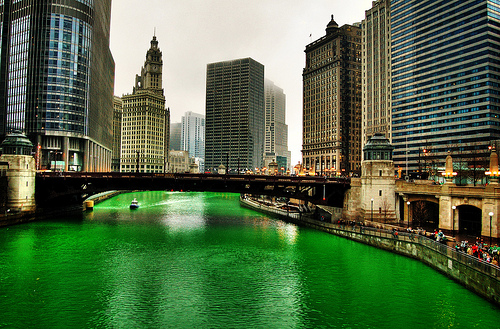
                    
     As I mentioned before, not only did they migrate to the US. Great Britain also has a big number of Irish people living there. ‘Kilburn’ (London) or Manchester are other areas where the Irish are predominant.


      Canada also has a large number of Irishmen. It is the 4th largest ethnic group with over 4 million Canadians (14%) with full or part Irish descent. Over two million live in Ontario. The majority arrived in the 1820s to work and settle there. As a result, the countryside is full of neighborhoods and places with names from Ireland. One of these is Corktown, named after the descendents from Cork County. 


Sources: http://www.greenchicagoriver.com/story.html
               http://www.irishtimes.com/timeseye/whoweare/p8topa.htm    

Wednesday, December 19, 2012

Celtic Music in Spain

     We already know that 'Celtic Music' is a wide concept, so much so that there are many different theories about if we can define all this kind of music as celtic. There are some authors as Geoff Wallis and Sue Wilson in 'The Rough guide to Irish Music' who think that the differences between celtic music from Scotland and Ireland and the music produced in the rest of Europe or US has almost nothing to do one with each other. Alan Stivell takes into account older researches and he thinks that the base or origin is the same with variants.
     Here in Spain, the regions of Galicia, Cantabria and Asturias were in the past celtic areas, to such a degree that the only intact celtic town remaining of all Europe is Castro (Galicia). But particularly in music, Spanish Celtic music does not shows the same patterns as the Irish one, yet, they share origins. 
     Although unfortunately it hasn't got a higher level of importance within the music in Spain, there are several festivals of celtic music such as:

  • 'Festival Internacional del Mundo Celta de Ortigueira' in Ortigueira (La Coruña).
  • 'Festival Intercéltico de Avilés' in Avilés.
  • 'Folixa na Primavera' in Mieres.
  • 'Folkomillas Festival' in Comillas.
  • 'Festival Internacional de Música Celta de Collado Villalba' in Collado Villalba.
  • 'Sauga Folk' in Colindres.
  • 'Festival Intercéltico de Orejo' in Marina de Cudeyo.
  • 'Festa da Carballeira' in Zas (La Coruña).
     Something interesting is that in most of the cases, the bands of celtic music sing in gallego:

  • Luar na Lubre, Milladoiro, Os Cempés, Carlos Núñez, Berrogüetto, Susana Seivane, Cristina Pato, Xosé Manuel Budiño, Mercedes Peón, Anxo Lorenzo (fusion of celtic and electronic music).
     From Asturias:

  • José Ángel Hevia (precursor of the electronic bag-pipe), Tejedor, Felpeyu, Llan de Cubel, Corquiéu.
     In some other regions:

  • Luétiga, Garma, Gatu Malu, Cahórnega, Naheba, Atlántica, Cambera'l Cierzu, Antubel, Gandalf, Tsuniegu, Olwen, Medulia, L'Arcu la vieya, O'Carolan, Hibai Deiedra, Kepa Junkera, Zamburiel.
     More recently, groups like Triquel, Celtas Cortos, Aquelarre AgroCelta, Ñu, El Sueño de Morfeo (more pop), Lándevir or Saurom, experiment with the fusion of the celtic with variations of pop, rock, heavy metal, etc. But the most famous one is Mago de Öz (rock heavy and celtic sounds).

     Here you can listen to the songs of some of the groups/singers before mentioned that are the ones that I like most: Hevia, Celtas Cortos, El Sueño de Morfeo (before called Xemá) and Mago de Öz.


Sources:
http://en.wikipedia.org/wiki/Celtic_music
http://es.wikipedia.org/wiki/M%C3%BAsica_celta#M.C3.BAsica_celta_en_Espa.C3.B1a

Irish Christmas Recipes

    Christmas is around the corner and what could be better way to get into the Christmas traditions of Ireland than writing about the typical Irish Christmas plates? Goose, roast turkey or ham with cranberry sauce, smoked salmon, prawns, roast potatoes, smashed potatoes, creamed peas, brussel sprouts, mince pies, puddings and cakes...Of all these is a real Irish Christmas made!

Bainigí sult as!
    Traditional Irish Christmas Meal begins with starters. Typical starters are smoked salmon, prawns, melon or soup. The starters are followed by the Main Course. Nowadays almost everyone eats turkey for dinner in Christmas Eve, but roast turkey didn't become the first choice of Irish Christmas recipes until the 20th century.  For this reason there are still families who prefer goose as it is more traditional. Roast ham is also becoming more popular among the Irish.
    Spiced beef is a traditional Christmas food throughout Ireland but mostly in the southern regions, especially in Cork. It is a delicacy that is not available at any other time of year. Spiced beef is made by marinating beef in a mixture of spices, juniper berries and sugar. The marinating process is slow and can take for up to two weeks! The cured beef is then slow roasted. When cooked, the beef is pressed to make a densly textured meat which can be cut in thin slices easily.


    Even it can seem impossible to even think about having Dessert after all these delicious plates, it is as important part of the meal as the others and after all- this is not an ordinary day! Popular Christmas desserts are Christmas pudding, hot mince pies served with fresh whipped cream or just a slice of Christmas cake.
    The rich, fruity cake is an indispensable part of an Irish Christmas. A true Irish Christmas Cake is laced with a whole lot of true Irish whiskey. During the final week before Christmas, the Christmas Cake is covered with sheets of marzipan. Cake is prepared and slices of it are served to all the visitors during all Christmas time.
    The Christmas pudding is also known as ‘plum pudding’, though it contains no plums. It is the traditional Christmas day dessert. The pudding can be served with a brandy or sherry sauce.
    The tradition of eating "plum pudding" is a tradition that began as plum porridge: "People ate the porridge on Christmas Eve, using it to line their stomachs after a day of fasting. Soon dried fruit, spices and honey were added to the porridge mixture, and eventually it turned into Christmas pudding. The Irish tradition is to pour a drop of brandy on the pudding and set it alight before it is served".

Merry Christmas! Nollaig Shona!

Sources:

Tuesday, December 18, 2012

Creatures from Éire


        In this post I am going to show you several mythological creatures found in Irish folklore. The amount of these creatures is huge and it is very interesting to notice that some of them can also be found in other places near Ireland. The selection I have done is just based on my own liking. I hope you enjoy it!


         Without a doubt, leprechauns are the most famous legendary creatures in Ireland and today they have become a symbol of the country. They are male fairies who spent their time making shoes. Legends tell that in war times they earned huge amounts of gold and they keep it hidden in a vessel hidden at the end of a rainbow. This is the reason why they are regarded as a sign of prosperity and good luck. They appear like old men and even if they are usually represented wearing green clothes, actually old legends tell about red ones. It is also said that if a human captures a leprechaun, they will grant three wishes as an exchange for his freedom.


        Selkies are mythological creatures found in Scottish, Icelandic and Irish folklore. In Ireland, they are also known as roane. They are shape-shifters, living as seals in the waters and becoming human on land after shedding their skin. Both, male and female selkies are said to be incredibly beautiful creatures and legend tells that if a man find the skin of a selkie, he can demand her to marry him and she won't refuse to do it. Another legend about this creature tells that selkies cannot watch humans for too much time before going back to the ocean.


Stamps depicting selkies from Faroe Islands.


        Banshees are probably one of the darkest creatures in Irish folklore. They are female spirits regarded as omens of death and messengers from the hereafter. Legends tell that they appear before somebody announcing that a relative of him or her is going to pass away soon. They usually can be seen crying, screaming and bawling but some other times they only are noticeable for their shrieks.


        The púka or pooka is one of the most feared creatures in Irish folklore. They are evil fairies that are said to be able to change their shape. They usually appear as a fearsome black horse that runs through the fields ruining the harvest and destroying farms. This is one of the most frequent shapes they adopt, but the real shape of the pooka is actually pretty much ridiculous in comparison: they are just little and deformed fairies similar to trolls.


        Irish mythology, along with all its creatures and stories, has helped to develop the fantastic genre in such a way that, without it, fantasy would not be the same at all nowadays.

Christmas in Ireland

     In Ireland as in most of the Eastern countries, Christmas is the largest and most important celebration of the year, taking place between the 24th of December to the 6th of January. Christmas decorations have to be taken down on this last day known as “Little Christmas”, and it is said to bring bad luck to take them down before then.
     As in Spain, it is an Irish tradition for people to decorate their houses by setting a traditional crib. They also set the Christmas tree which is officially set up on the 8th of December to commemorate the Immaculate Conception. The placing of a ring of Holly on doors originated in Ireland as Holly was one of the main plants which flourished at Christmas time and poor people used them to decorate their houses. This plant along with ivy, are also used by the Irish in Christmas to decorate graves.
Candles are lit and placed on the windows to symbolize hospitality for Mary and Joseph as a way of saying that there is room for them in these houses. It also used to indicate a safe place for priests to perform mass because during the Penal Times this was not allowed.
     It is a tradition that the candle should be lit by the youngest member of the house and only be extinguished by a girl named “Mary”.
     In older years, after the Christmas Eve meal, the kitchen was again set and on it they placed a piece of bread filled with caraway seeds and raisins, a glass of milk and a large lit candle. The door to the house was left unlocked so that Mary and Joseph could make use of the welcome.


     Santa Clause, or “Daidí na Nollag” (Daddy of Christmas) also visits the Irish Kids!
     Traditionally, before going to bed, kids left a mince pie and a bottle of Guinness for Santa Claus and carrots for Rudolph; but because of the American influence, recently the mince pie is been replaced with cookies and Guinness with milk… Sure Santa or “Santy” (as they call him) is not very happy with this change.
     There is an Irish recent tradition called “The Christmas swim”; on Christmas morning people take a swim at the sea, often done in aid of charity. It officially started in 1965. Arlon Owens and his friend Victor Davies would go for a swim in the sea everyday including Christmas day year after year. When people started gathering to watch these men dipping into the icy waters at the Porthcawl harbor they decided to treat it as a fund-raising spectacle. Today is a national organization called “The Porthcawl Christmas Swim” with thousands of spectators and swimmers every year that contribute to the founding.
Check out their web site: http://christmasswim.org/ 
                            Hope you all have a wonderful holidays and 'Nollaig Shona Duit' (Merry Christmas)

Monday, December 17, 2012

Riverdance- The Irish Dancing Phenomenon

    After having won the Eurovision Competition in 1993, it was Ireland's time to organize the next years contest. Producer Moya Doherty was given the hard task of producing the show and of preparing an act for the 20-minute interval while the national juries voted. Doherty came up with an idea of putting together Irish traditional dancers with the choir Anuna to make a traditional Irish dance number. This number, called Riverdance, was composed by Bill Whelan and  was so successful that it was decided to expand into a full stage show. Riverdance changed from being only a brief interval entertainment for being a world wide known dancing phenomenon.

                                            The Eurovision Competition 1994, Riverdance

What is Riverdance?

    "Riverdance is a theatrical show consisting of traditional Irish stepdance known for its rapid leg movements while body and arms are kept largely stationary. Riverdance is, in summary form, the story of the Irish culture and of the Irish immigration to America."


Why is the show called Riverdance?

    The show is called Riverdance because it is based on the life of a river. Beginning quietly with the cloudsong it grows flowing as a stream represented by the soft shoe dance of the Riverwoman, meeting and awakening the land represented  by the hard shoe solo of Earthrise and finally growing and growing until throwing it self into the sea.


Riverdance song and dance numbers
Riverdance: The Show (1995)Riverdance: Live From New York (1996)Riverdance: Live From Geneva (2002)
  1. Reel Around The Sun
  2. The Heart’s Cry
  3. Countess Cathleen – Women of Ireland
  4. Caoineadh Chú Chulainn
  5. Distant Thunder
  6. Firedance
  7. Riverdance
  8. Lift The Wings
  9. Freedom
  10. Harlem to Hollywood *
  11. Andalucia *
  12. Macedonia Morning *
  13. Marta's Dance – The Russian Dervish
  14. Hope to the Suffering *
  15. Michael Flatley Flute Solo – Whispering Winds *
  16. Home And The Heartland *
  17. Heartland
  18. Riverdance International

  1. Reel Around The Sun
  2. The Heart's Cry
  3. Countess Cathleen – Women of the Sidhe
  4. Caoineadh Chú Chulainn
  5. Thunderstorm
  6. Firedance
  7. Slip Into Spring – The Harvest
  8. Cloudsong
  9. Riverdance
  10. American Wake (The Nova Scotia Set)
  11. Lift The Wings
  12. Heal Their Hearts – Freedom
  13. Trading Taps
  14. Marta's Dance – The Russian Dervish
  15. Oscail An Doras
  16. Heartbeat Of The world
  17. Homecoming
  18. Home And The Heartland
  19. Heartland
  20. Riverdance International
  1. Reel Around the Sun
  2. The Heart's Cry
  3. Countess Cathleen – Women of the Sidhe
  4. Caoineadh Chú Chulainn
  5. Thunderstorm
  6. Shivna
  7. Firedance
  8. Slip into Spring – The Harvest
  9. Cloudsong
  10. Riverdance
  11. American Wake (The Nova Scotia Set)
  12. Lift the Wings
  13. Harbor of the New World
  14. Slow Air / The Tunes
  15. Home and the Heartland
  16. Heartland
  17. Finale / Riverdance International

Sources:
 http://en.wikipedia.org/wiki/Riverdance
 http://www.amazon.com/Riverdance-Music-From-The-Show/dp/B000005B2O
 http://www.celticcafe.com/archive/Shows/riverdance/Rdfaq.htm

Saturday, December 15, 2012

Boston Celtics

DO YOU RECOGNIZE THIS IMAGE?

Well, if you love sports and specially basketball you probably do. 
What has this to do with the Irish?...
Who is this guy?...
Why is he wearing these clothes?...
All these questions you'll probably be wondering about will be answered in this post.

Ladies and gentlemen, you're going to let me introduce this image; this is the logo of the franchise of the Boston Celtics, one of the best basketball teams of all times, this is a classic of the NBA.


    Image belonging to the official site of the boston celtics: http://www.nba.com/celtics

And, is it related to the Irish? Yes, listen; after the Great Famine in the middle of the nineteenth century in Ireland, a great part of the population had to leave their country to move to the United States looking for new lives. The first cities populated by Irish people were in the east coast of the USA. Boston became one of the centers to the arrival of Irish people.

That's the reason why Walter Brown (owner of the franchise) decided to choose a Leprechaun (wearing a waistcoat full of shamrocks) as a symbol of the team, because of the influence of the Irish in that city. Furthermore, the name of the team holds the word "Celtics" referring to the origins of the Irish.


Sources:

http://descubreirlanda.blogspot.com.es/